
Should I Get Bangs? A 2-Minute Face-Shape Test
Should I get bangs? Take this 2-minute face shape test. See which bang style suits oval, round, square, and heart faces, then preview it on your photo.
It starts small. You see a curtain bangs tutorial. You screenshot a blunt fringe at midnight. By Friday you are typing the same question into every search box: should I get bangs?
Bangs are the cheapest haircut with the longest consequences. The cut takes ten minutes. The commitment takes months. So before you book a chair, take the two-minute test below. It uses your face shape and your forehead, the same two things a stylist checks in a consultation.
By the end you will know your best bang type. You will also see how to test it on your own face before a single snip.
The 2-Minute Face-Shape Test for Bangs
First, find your face shape. Pull your hair back and take a straight-on photo. Compare what you see with the chart in our face shape guide. It takes two minutes with a mirror.
Then match your shape to the bang types stylists recommend. The team at Byrdie reviewed this pairing with professional stylists. Their table is the closest thing the hair world has to a cheat code.
| Your face shape | The bang style pros suggest | Why it works |
|---|---|---|
| Oval | Blunt bangs | An oval face carries a full fringe with balance |
| Round | Side-swept bangs | The diagonal line adds length and angles |
| Square | Wispy fringe | Soft strands relax a strong jawline |
| Heart | Blunt and narrow fringe | Fullness at the brow balances a pointed chin |
| Diamond | Side-swept fringe | It softens the cheekbone line |
| Oblong | Side-swept with feathered fringe | Width at the sides shortens a long face |
Brad Mondo, one of the biggest hair voices on YouTube, made a full guide on which bangs flatter which faces. It has over 5 million views. Watch "Bangs Can Make You Prettier, Here's Which Ones To Get". The channel dear peachie covers the same decision for Asian face features in a video with 1.5 million views. See it here.
Your Forehead Is the Second Test
Face shape is half the answer. Your forehead height is the other half.
Stylist Lorna Pollack shared the rule with Byrdie. A longer forehead pairs beautifully with a chic blunt bang. The fringe covers the space and frames the eyes.
A shorter forehead needs the opposite approach. A heavy blunt fringe can swallow a small forehead and shrink the whole face. Keep the fringe light and soft, Pollack advises. A soft side-swept style gives a lengthening effect instead.
So the two-minute test has two lines. Face shape picks the bang type. Forehead height picks the weight. A round face with a high forehead lands on light side-swept bangs. A heart face with a shorter forehead lands on a narrow, airy fringe.
Curtain Bangs: The Beginner's Bang
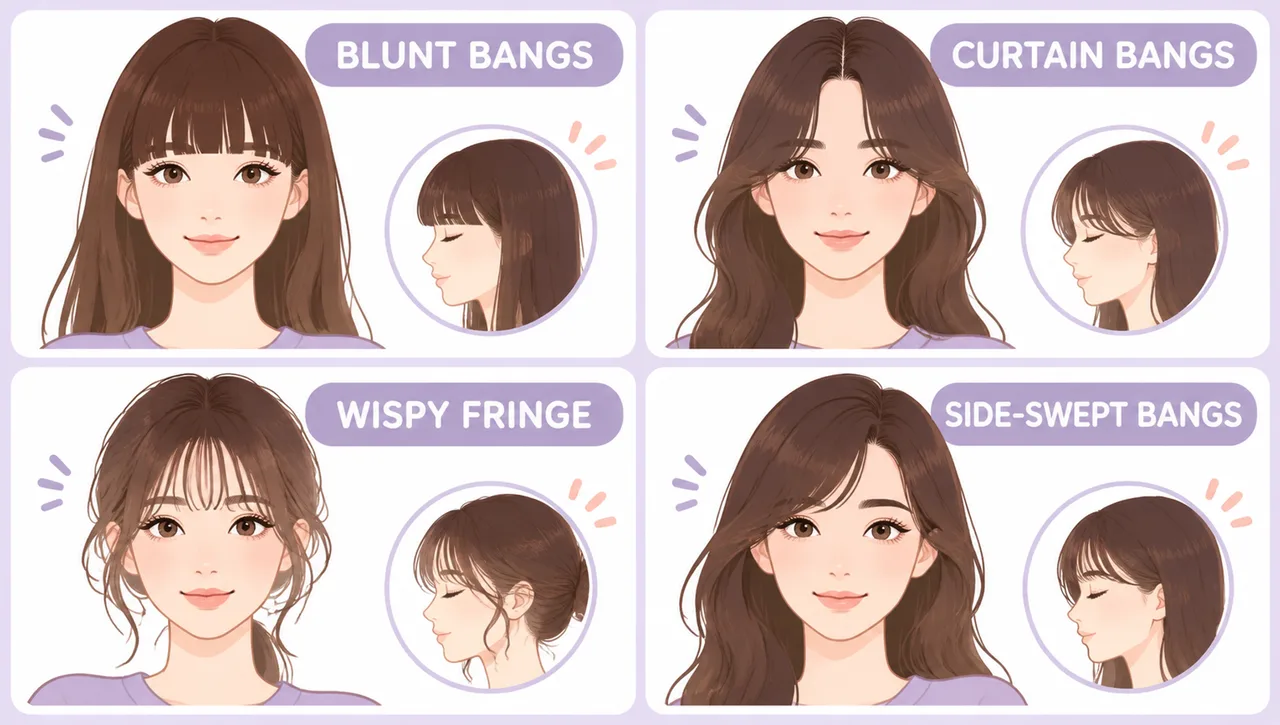
If you want the least risky entry into bangs, curtain bangs are it. They part in the middle and sweep outward like, well, curtains. They frame the cheekbones and blend into the rest of the hair.
Curtain bangs suit almost every face shape. They grow out gracefully. They style in under a minute with a round brush or even fingers. When people ask "should I get bangs?" with fear in their voice, stylists usually point here first.
The style is hugely popular too. Brad Mondo's tutorial on cutting curtain bangs has more than 8.3 million views. Watch it here. TikTok agrees. An at-home curtain bangs tutorial by creator Natalia has drawn 1.3 million likes on the platform. See the TikTok here. Another step-by-step from Katerina Bartova sits at 287,000 likes. Watch that one here.
One honest note on those tutorials. They show people cutting their own fringe with craft scissors and steady nerves. Most stylists recommend letting a salon do the first cut. Tutorials are a great way to learn daily styling, which is half the bangs game anyway.


Bang Types Ranked by Maintenance
Choose with your schedule in mind, not just your face. Here is the honest ranking, from easiest to highest effort.
- Curtain bangs. The gentlest option. Styles in a minute and forgives late trims.
- Wispy fringe. Light and airy. Looks fine a bit overgrown.
- Side-swept bangs. Needs a blow dryer to hold the sweep. Medium effort.
- Blunt bangs. The diva. Wants a flat iron daily and a trim every few weeks to stay sharp.
The maintenance gap is real. A standard haircut needs a salon visit every three to four months, per stylist guidance in Byrdie's cut guide. A blunt fringe needs attention every few weeks. That is a different relationship with your salon.
Hair texture changes the math too. Fine hair lies flat in blunt lines and shows oil faster. Thick hair holds a heavy fringe well but can bulk up around the temples. Curly hair can wear gorgeous bangs, though they shrink up as they dry. Ask your stylist to cut curly fringe dry.
Five Honest Questions Before You Say Yes
The chart tells you which bangs suit your face. These five questions tell you whether bangs suit your life. Answer them in your head right now.
- How do you feel about a daily styling step? Bangs are the first thing people see and the first thing a pillow destroys. Blunt fringe needs heat tools almost daily. Curtain bangs survive a finger comb.
- Is your forehead skin calm? Fringe rests on your forehead for hours. On oily or breakout-prone skin, that contact can clog pores. If this is you, favor lighter, airier bangs that lift off the skin.
- Do you wear glasses? Bangs and glasses can stack visual weight on the same small zone. A longer curtain or side-swept fringe clears the frames. Short blunt fringe plus strong frames can feel busy.
- Do you sweat early in the day? Workouts and commutes stick bangs to your forehead. A soft band or a quick blow-dry with a round brush resets them. Decide if that sounds fine or awful.
- Can you commit to the trims? Fringe loses its shape in three to four weeks. Many salons do quick fringe trims between full cuts, often free or cheap for regulars. No trim budget means no blunt bangs.
Score four or five yes answers and you are a bangs person. Two or fewer, keep the forehead free and live through curtain bangs on video like everyone else.
The Grow-Out Map, Drawn in Advance
Smart bangs planners pick their exit before they enter. Fringe grows about half an inch a month, the same as the rest of your hair, per Verywell Health.
The classic escape route has three stops. Month one, a soft trim turns blunt fringe into a wispy fringe. Month two or three, that wispy fringe becomes curtain bangs swept to the sides. Month four and beyond, the curtain blends into face-framing layers and disappears. Each stage is a real hairstyle, not a waiting room.
This is also the strongest argument for starting with curtain bangs. Your exit route and your entry style are the same haircut.
See Yourself With Bangs Before You Cut
You have a shape match and a maintenance budget. One question remains. Will you like the face in the mirror?
Photos of other people cannot answer it. Their forehead, brows, and bone structure are not yours. This is the exact gap an AI haircut try-on closes. Upload one selfie. Type "curtain bangs" or "blunt fringe". See the bangs on your own face in a few minutes.
Generate all four bang types and compare them side by side. Show the winner to your stylist. A preview on your own face beats a hundred screenshots of strangers.
Small wording changes produce very different fringes. Try "soft wispy fringe, eyebrow length" against "blunt fringe, chin of the brow". Try "curtain bangs, cheekbone length" against "curtain bangs with long layers". Four generations is usually enough to see your winner clearly.
One test beats every chart in this article. The shape table narrows the options. Your reaction to your own photo makes the final call. When the preview makes you smile, you have your answer. When you tilt your head and squint, generate the next type.
If you still want a second opinion first, Refining Style made a decision video for exactly this moment. Watch "'Should I get Bangs?' Watch this before you decide".
FAQ
Do bangs suit a round face?
Yes, with the right type. Side-swept bangs suit a round face best. The diagonal line adds length. Avoid wide blunt fringe, which can widen the face further.
How often do bangs need trimming?
Most fringe needs a trim every two to four weeks to hold its shape. Curtain bangs are the most forgiving between trims. Blunt bangs show growth the fastest.
Are curtain bangs low maintenance?
Relative to other bangs, yes. They blend into the layers around them and style quickly. They still need more attention than no bangs at all.
What if I hate my new bangs?
Give the shock a week first. Then use pins and headbands during the awkward stage, a tip Byrdie suggests for growing out fringe. Next time, preview the bangs on your own photo with an AI try-on before you cut.
Do bangs work with glasses?
Yes, with the right pairing. Side-swept and curtain bangs clear the frames naturally. If you wear strong frames, go longer and lighter with the fringe so the zone above your glasses stays open.
Can bangs cause breakouts?
They can contribute. Fringe rests directly on forehead skin and holds heat and oil against it. If your skin is breakout-prone, choose airy bangs, pin them back at night, and cleanse the hairline daily.
The Short Version
So, should I get bangs? Take the test. Your face shape picks the type. Your forehead picks the weight. Your schedule picks the maintenance level. Then preview the finalists on your own face before booking.
Ready to see the answer on your own selfie? Try the AI haircut try-on and meet the bang version of you first.