
How to Know What Hairstyle Suits You: A Simple 3-Step Process
Learn how to know what hairstyle suits you in 3 steps. Measure your face shape, match it to flattering cuts, and preview each style on your own photo.
You saved 47 hairstyle photos. You still have no idea which one to ask for. Every mirror session ends the same way. You close the app and keep the hair you have.
Here is the truth. Learning how to know what hairstyle suits you does not require a stylist degree. It takes three steps. You find your face shape. You match it to cuts that flatter it. Then you preview the winner on your own photo before any scissors touch your head.
This guide walks you through all three steps with advice from professional stylists. No fluff. No 40-item quiz. Just a clear process you can finish today.
Why Face Shape Is the Starting Point
Ask any stylist how to figure out what hairstyle suits you. Most will start with the same word: shape.
Your face shape sets the frame. A cut either works with that frame or fights it. The team at Byrdie put it simply: once you know your shape, a whole world of flattering haircuts opens up.
Two celebrity stylists guide the advice below. Nate Rosenkranz styles clients in New York. Kylee Heath is a member of the R+Co Collective. Their rules come from thousands of real salon appointments.
One more thing before we start. These are guidelines, not laws. Byrdie's styling experts remind every reader that you are allowed to break the rules. Balance matters more than any chart.
Step 1: Find Your Face Shape in Two Minutes
You need a flexible tape measure, a mirror, and a phone. If measuring feels awkward, take a straight-on selfie with your hair pulled back. Trace the outline on your screen with your finger. Both methods work.
Take four measurements, as described in Byrdie's face shape guide:
- Face length. Measure from the center of your hairline to the bottom of your chin.
- Forehead width. Measure across your forehead from peak to peak.
- Cheekbone width. Measure from one cheekbone peak to the other.
- Jaw width. Measure from one corner of your jaw to the other.
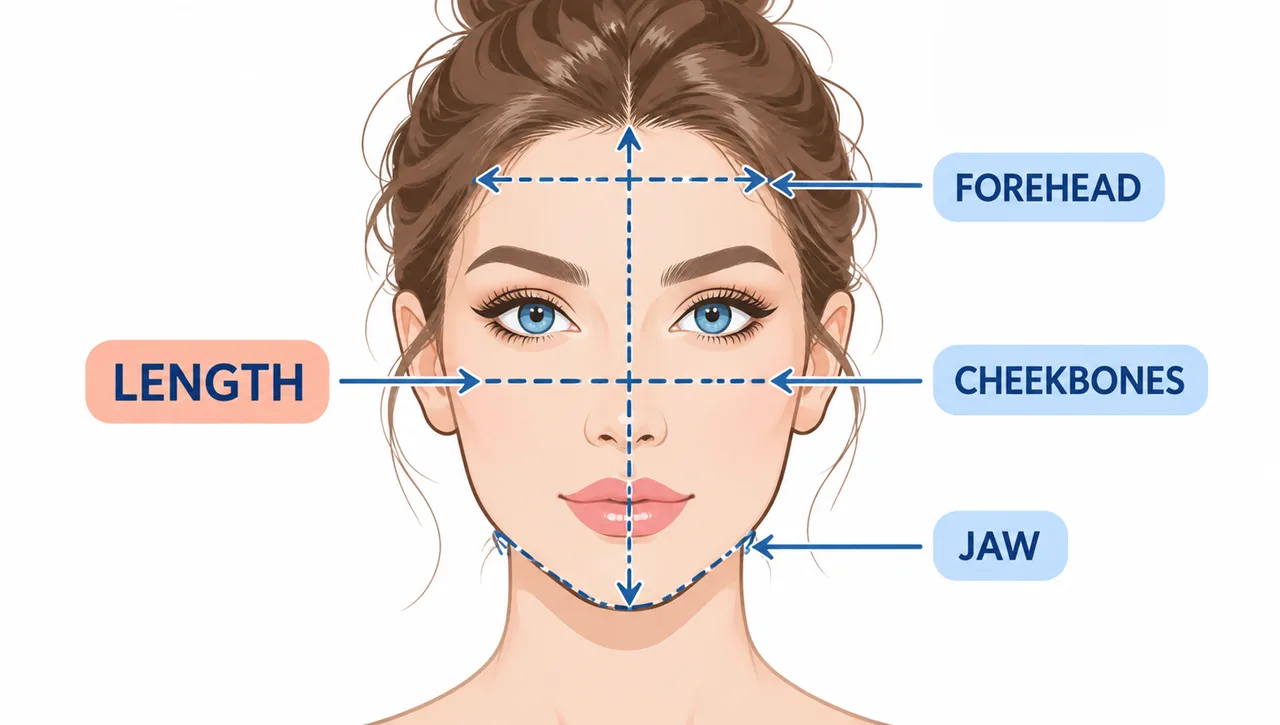
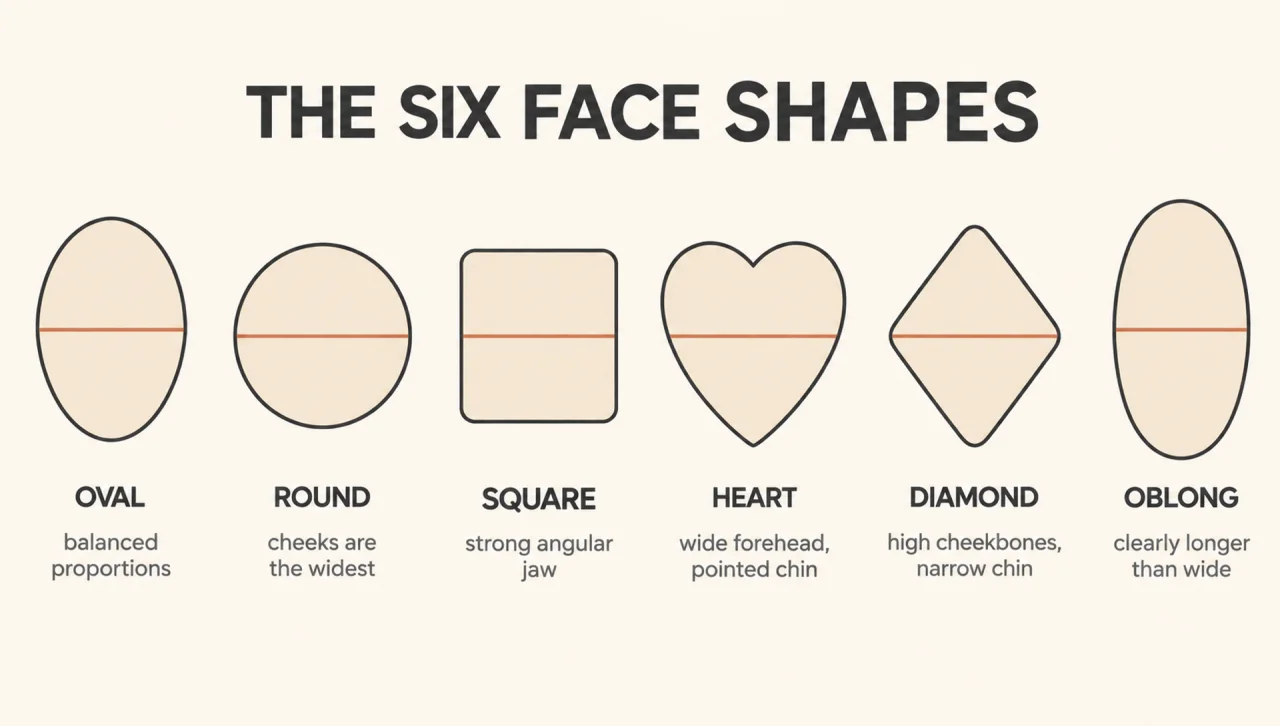
Now compare your numbers to the six common shapes below.
| Shape | Your measurements tell you | Famous examples |
|---|---|---|
| Oval | Face is a bit longer than wide. Forehead is slightly wider than the chin. | Beyoncé, Kim Kardashian |
| Round | Length and width are close. Cheeks are the widest part. Chin is soft. | Selena Gomez, Gemma Chan |
| Square | Length and width are close. Jaw is sharp and angular. | Angelina Jolie, Megan Thee Stallion |
| Heart | Forehead is the widest part. Chin comes to a point. | Reese Witherspoon, Sydney Sweeney |
| Diamond | Cheekbones are the widest part. Chin is pointed. Hairline is narrow. | Rihanna, Zoe Kravitz |
| Oblong | Forehead, cheeks, and jaw are near equal width. Face is clearly longer than wide. | Bella Hadid, Alexa Chung |
Prefer watching over reading? Justine Leconte's tutorial on face shapes and matching haircuts has over 9.7 million views. Watch it here. Birchbox also has a short classic guide with over 2.3 million views. See it here.
Step 2: Match Your Shape to Cuts That Flatter It
This is the fun part. This is where you learn what haircut suits your face shape without guessing. The rules below come straight from the stylists interviewed by Byrdie.
Oval: Nearly Everything Works
An oval face carries almost any length. Try an angular bob, long beachy waves, or a layered cut. Rosenkranz suggests styles that enhance your favorite features. His one warning: skip extreme height on top. Too much height stretches an oval face toward oblong.
Round: Add Length and Angles
Round faces shine with cuts that add length and structure. Chin-length bobs and long bobs work well. Soft face-framing layers help too. Longer bangs can slim the sides. The goal is a stronger angular front and a bit of height. Skip one-length cuts that widen the cheeks.
Square: Soften the Corners
A square jaw is a striking feature. The trick is styles that soften it. Textured shags, long layers, and side-swept bangs all do this. Wavy ends add movement around a strong jawline. Rosenkranz advises avoiding blunt lines and heavy fringe. Both can box in the face even more.
Heart: Build Width at the Jaw
A wide forehead with a narrow chin wants balance. Side-swept bangs and brow-grazing fringe draw attention to the eyes. Long layers add fullness through the nape and jawline. Pixie cuts also flatter this shape. Avoid styles that pile volume on top. That widens the forehead further.
Diamond: Keep Softness at the Hairline
High cheekbones are the gift of a diamond face. A soft fringe and some length soften the angles. Long layers, textured shags, and side-swept bangs all suit you. Kylee Heath loves a ponytail on this shape. Skip styles that spotlight the jawline. That is the one spot to leave quiet.
Oblong: Add Width at the Sides
Longer faces want fullness from the ears up. Soft waves, face-framing layers, and chin-length bobs are your best friends. Curls with bangs are a fresh look here, says Heath. Avoid flat, pin-straight hair with no movement. Straight styles with zero width stretch the face even longer.
Want a second opinion in video form? Brad Mondo, one of the biggest hair educators on YouTube, explains picking cuts by face shape in a video with 5.7 million views. Watch it here.
Picking a Length: The Other Half of Step 2
Shape tells you the silhouette. Length decides how that silhouette hits your features. Three anchors cover most decisions.
Short cuts land weight at the jaw and cheekbones. They spotlight your face and your eyes. They also spotlight a cut that is even two weeks overgrown. Short works best for people who enjoy maintenance, not people who tolerate it.
Medium lengths, from chin to collarbone, are the most forgiving zone. They hit between the jaw and shoulders, which flatters the widest range of shapes. A long bob in this range is the single most requested salon cut for a reason.
Long hair pulls the eye vertically, which lengthens round and square faces nicely. Length also builds weight that can drag fine hair flat. If your hair is fine, long works better with visible layers that keep the ends from disappearing.
A useful shortcut: find photos of your shape at all three lengths. Your gut will reject one range within seconds. That instant reaction saves an hour of deliberation.
The Same Rules Work for Men's Cuts
Men ask the same question with different vocabulary. Fade or taper? Crop or quiff? Textured fringe or clean sides? The answer still starts with face shape.
The mapping logic holds. A round face wants height on top and tighter sides. That vertical line stretches the face. A square face suits textured crops and fringe that soften the jaw. An oblong face should go easy on tall pompadours, since extra height stretches it further. An oval face can carry almost anything from a buzz cut to a man bun.
Hairline adds one men-only variable. A receding hairline changes which fringe and fringe-adjacent styles make sense. A textured fringe with a lower taper is a classic pairing here because it draws the eye forward instead of up.
GQ made a clear men's guide on choosing cuts by face shape, and it has over 2.1 million views. Watch it here.
Step 3: Factor in Hair Texture and Real Life
Face shape tells you the shape of the cut. Hair texture decides how that cut behaves. This step is where most hairstyle guides stop and where yours should not.
Brooklyn stylist Lorna Pollack shared these texture rules with Byrdie:
| Your texture | What to ask for | What to avoid |
|---|---|---|
| Fine | Blunt lines and minimal layers. A blunt bob keeps strength in the length. | Heavy layering that thins the ends |
| Medium | Almost any length. Layers add movement without losing density. | No hard limits. Experiment freely. |
| Thick | Long layers that remove weight and make daily styling easier. | One-length bulk that takes forever to blow dry |

Then comes the honest question. How much styling will you really do?
Pollack recommends a salon visit every three to four months for a standard cut. Blunt fringe and pixie cuts need far more attention. If you see your stylist twice a year, a high-maintenance look will fight you. A long layered cut with a feathered fringe forgives gaps between appointments.
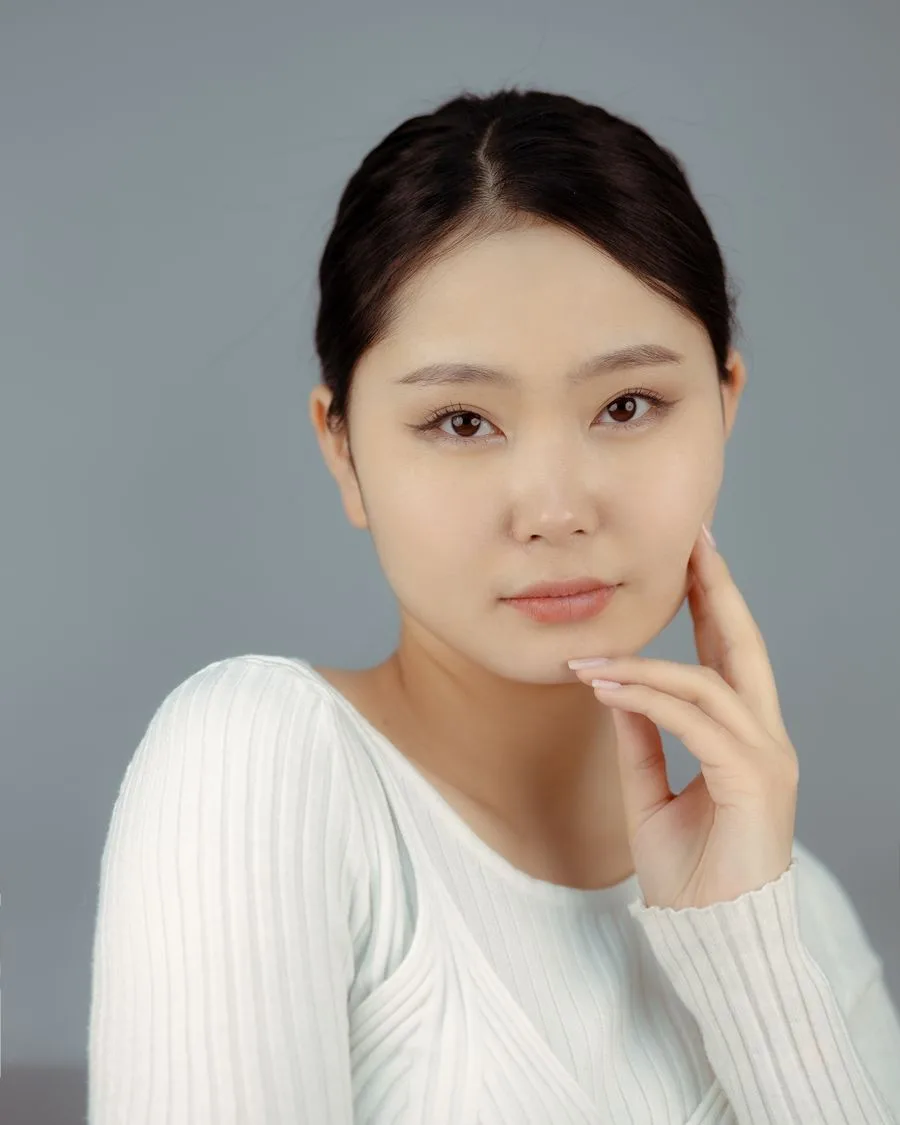
Think about your mornings. Straight bangs ask for a blow dryer and a flat iron most days. Air-dried texture asks for almost nothing. The best haircut for your life is the one you can repeat at 7 a.m. before coffee.
The Five-Minute Lifestyle Audit
Answer these five questions before you fall in love with a photo. Each one kills a specific future regret.
- How many minutes will you give it daily? Be honest, not aspirational. A sleek bob is a 15-minute morning. Waves from a cut built for air drying are a two-minute morning.
- Do you train hard or swim? Sweat and pool water fight blunt structure and bangs. Textured cuts recover from a ponytail day far better.
- Is your air humid? Fine hair with a blunt cut puffs at the first sign of moisture. A shape with movement hides the frizz instead of announcing it.
- Do you wear hats or helmets? Flat spots ruin precise lines. Softer, broken-up shapes bounce back.
- How do you actually wear your hair most days? If the honest answer is "up in a claw clip", build the cut around that. Face-framing layers look intentional in a clip. A one-length bob fights it.
This audit is why two people can love the same photo and need different haircuts. The photo shows a shape. Your life decides which version of it survives.
Preview Before You Cut: The Step Most People Skip
You now have a shape, a shortlist of cuts, and a texture filter. There is one final answer to how to find the best hairstyle for my face. You preview the shortlist on your own photo.
Why does this matter? Reference photos fail for a predictable reason. The photo shows the cut on a different face, a different texture, and a different density. Your stylist can copy the shape. They cannot copy how it sits on you.
This is exactly what an AI haircut try-on tool solves. You upload one clear selfie. You type the cut you are considering. You see it on your own face in a few minutes. Generate a bob at two lengths. Compare a side-swept fringe against full bangs. Print or save the version you love and take it to your salon.
Simple prompts work best. Try "shoulder-length layered cut with side-swept bangs". Or "textured crop with a low taper". Or "long bob, collarbone length, soft waves". Each generation gives you a realistic photo of that cut on your own head. Generate the same style twice and compare tiny wording changes. It is the closest thing to a test drive that hair offers.
Hair grows back about half an inch per month, according to Verywell Health. That is roughly six inches a year. A preview that costs minutes can save you a year of growing out a cut that never suited you.
Bring the Preview, Not Just a Wish
The salon chair is where research meets reality. A great preview only works if you communicate it. Here is the three-part script stylists love.
Show the photo of yourself, not the celebrity. A preview on your own face removes the translation step. Your stylist sees exactly how the cut should sit on your bone structure.
Name the length in inches or reference points. "Chin length" beats "short". "Collarbone" beats "not too long". Numbers and landmarks kill ambiguity.
Describe your routine in one sentence. "I air dry and style for five minutes" steers every scissor decision. A stylist cuts differently for a five-minute morning than a thirty-minute one.
If the conversation still feels hard, bring two or three preview images and ask which one suits your texture best. You bring the direction. Let the expert refine it. That partnership is how a good haircut happens.
FAQ
Which hairstyle suits an oval face?
Almost any style. Angular bobs, long waves, and layered cuts all work. Keep extreme height on top to a minimum so the face does not stretch longer.
How do I choose a haircut for fine hair?
Keep it blunt with few layers. A one-length bob holds its shape better than a heavily layered cut. Fine hair shows every thin spot at the ends.
Can I break face shape rules?
Yes. Stylists say these rules are starting points, not laws. Balance is the real goal. If a rule-breaking cut makes you feel great, wear it with confidence.
How often should I cut my hair?
Every three to four months for most lengths, per stylist guidance. Short cuts, blunt fringe, and pixies need trims every few weeks to stay sharp.
Which face shape is the most versatile?
Oval is widely called the most versatile shape. Its balanced proportions carry most lengths and styles. Remember that versatility is a starting point, not a ranking. Every shape has signature looks others cannot wear as well.
How do I know my hair texture?
Take one clean, dry strand and roll it between your fingers. Fine hair feels like thread and is hard to feel. Medium hair feels like cotton thread. Coarse hair feels strong and wiry. Density is separate. It is how many strands you have per square inch.
The Short Version
You now know the full process of how to know what hairstyle suits you. Measure four points to find your face shape. Match the shape to cuts that flatter it. Filter by your texture and your real routine. Then preview the finalists on your own photo before booking the chair.
Ready for the last step? Upload a selfie to our AI haircut try-on and see your shortlist on your own face. It takes minutes and costs nothing to start.